The acquisition mindset
Find the property. Arrange the capital. Complete the transaction.
Necessary—but incomplete.
A practical framework for shared housing
Learn how to transform ordinary single-family homes into professionally operated coliving businesses that generate durable cash flow through operational excellence.
Clear frameworks. Disciplined underwriting. Better operations.
The operating gap
Most real estate education focuses on finding, financing, and closing. In shared housing, the quality of the operating system often determines what happens next.
Find the property. Arrange the capital. Complete the transaction.
Necessary—but incomplete.
Design the resident experience. Manage occupancy, expenses, maintenance, and standards. Improve the system over time.
Where durable performance is built.
What you'll learn
Practical frameworks for evaluating the opportunity, serving residents well, and building a business designed to endure.
Evaluate homes through the lens of room configuration, demand, operating constraints, and long-term fit.
Create repeatable standards for leasing, resident service, maintenance, communication, and accountability.
Understand how occupancy, pricing, turnover, and expense discipline shape durable property-level cash flow.
Turn experience into systems so each additional property strengthens—not strains—the operation.
The book
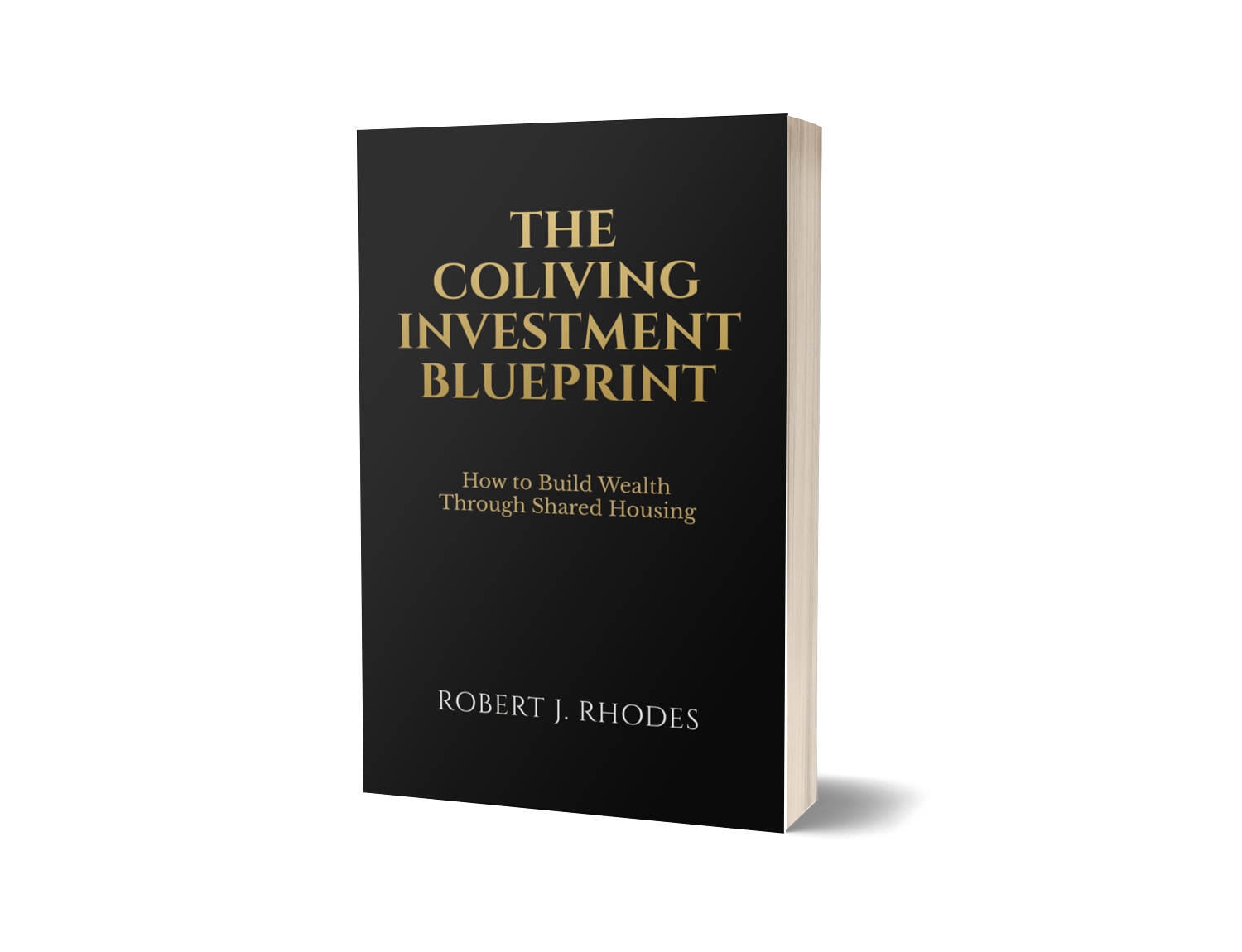
Coliving Blueprint is designed to help readers see the full operating model—not just the real estate transaction. It brings acquisition, resident experience, financial discipline, and repeatable systems into one practical framework.
The Coliving Calculator™
Test a coliving opportunity using assumptions that reflect how the business actually runs. Examine the relationship between rooms, occupancy, expenses, cash flow, and returns before making a decision.
Why coliving works
Shared housing can create value when the physical home, financial model, and resident experience are managed as one business.
Individual rooms create a different revenue structure and more ways to respond to local housing demand.
Clear standards, responsive management, and disciplined processes support consistent execution.
Safe, predictable, respectful housing begins with treating residents as customers—not line items.
Coliving is operationally intensive. It should be approached as an active business—not a passive investment.
About Robert J. Rhodes
Robert J. Rhodes brings together experience in healthcare leadership, operations, real estate, and systems thinking. Coliving Blueprint reflects a practical belief: better outcomes come from clear processes, disciplined execution, and respect for the people a business serves.
His work focuses on making shared housing easier to understand and more professional to operate—without minimizing the effort, judgment, or responsibility involved.
Use the system together
The book explains the operating principles behind shared housing. The Coliving Calculator™ helps you examine a specific opportunity through revenue, occupancy, expense, and return assumptions.
They serve different purposes—and are designed to be more useful together.
The ecosystem
Each resource is designed to support a different stage of the same operating journey.
Build the foundation.
Evaluate the numbers.
Continue learning.
Future resource
Future resource
Future resource
Frequently asked questions
Shared housing can be compelling, but it should be evaluated with the same discipline as any operating business.
Coliving is a shared-housing model in which residents typically occupy private bedrooms and share common spaces. The legal, leasing, and operating structure varies by property and jurisdiction.
No. Successful shared housing requires active attention to resident selection, communication, standards, maintenance, occupancy, and financial performance.
It helps you examine assumptions related to revenue, occupancy, expenses, sensitivity, cash flow, and returns. It is an analytical tool, not a guarantee of investment performance.
Use the book to understand the operating framework and the calculator to evaluate a specific opportunity. If you are new to the model, starting with the book provides useful context.
No. The book, calculator, and website are educational resources. Consult qualified legal, tax, financial, insurance, and local housing professionals for advice about your circumstances.